
Dramatic improvements for neurodiverse children at Derbyshire schools
Schools in Derby and Derbyshire have dramatically improved the way they support neurodiverse children, thanks to an initiative to improve inclusion.
The Partnership for Inclusion of Neurodiversity in Schools project provides training and support for teachers and school staff, working together with parents and carers.
Relatively small and inexpensive changes have helped to transform learning and opportunities for neurodiverse children – supporting them to thrive and achieve their potential.
The project ran in 38 primary schools during the academic year 2024/25 and a further 25 were supported in 2025/26.
For the schools that participated in 24/25, evaluation of data shows:
- permanent exclusions fell by 83% for participating schools, compared to 39% for other county schools
- the number of half day sessions lost to suspension reduced by 42%, from 901 in 2023/24 to 530 in 2024/25
- where part-time timetables were in place, the average length of time the child spent in school increased, often from as little as one hour a day up to four or five hours a day
- targeted and specialist referrals to Derbyshire’s Inclusion Support Advisory Service reduced by 66%
The project is one example of how services for children who have special educational needs and disabilities (SEND) are improving in Derbyshire, following a joint Ofsted and Care Quality Commission inspection in 2024.
It also shows one successful approach to meeting the needs of children who have SEND which is in line with the ambitions of the government’s recent White Paper on SEND reform: Every Child Achieving and Thriving.
Over the school year the Partnership for Inclusion of Neurodiversity in Schools scheme includes:
- two full days of training for school leaders
- four half day workshops for heads and/or special educational needs coordinators
- twelve webinars for education staff, other professionals, and parents and carers for all schools in the county
- support from volunteers in the Derbyshire Parent Carer Voice (DPCV) group to help set up or facilitate new parents support groups in the school setting. Parents are able to share their experiences of what worked for their children and what barriers could be reduced to enable meaningful inclusive education to be enhanced. The DPCV offer was bespoke to each school.
Using information from parent carer surveys, schools’ self-assessments and school data, the project was designed to support schools to become more inclusive settings.
Some of the practical changes put in place have included:
- reducing the risk of sensory overload through adjustments to the start or end of the school day or lunch time provision
- access to sensory tools and strategies to support children to regulate
- developing the use of language and communication that celebrates difference and which is positive about neurodiversity
- consideration of the environment where learning takes place to reduce cognitive load and/or sensory input
- enhance approaches to understand and support children who are anxious
- strategies for collecting authentic pupil voice using activities, such as ‘the Big Red Bus’ where children place photographs or pictures of the people who help them on the bus to show their support crew.
The Department for Education has provided £209,000 to NHS Derby and Derbyshire Integrated Care Board to fund the Partnership for Inclusion of Neurodiversity in Schools for each of the two years it is running.
The project brings together local NHS teams such as speech and language therapists, the local education authorities who support schools in Derbyshire and Derby, the Parent Carer Voice group and local schools themselves.
It is offered in addition to the support that is always available to schools in Derbyshire from the county council’s Inclusion Support Advisory Service.
This team helps to support schools to become more inclusive and to provide support at an appropriate level for children with additional needs. For example many children are successfully supported with relatively small changes, whereas others require more extensive help.
Councillor Simon Mabbott, Derbyshire County Council cabinet member for SEND and education, said: “The Partnership for Inclusion of Neurodiversity in Schools project has achieved significant improvements for neurodiverse children in its first year.
“It shows that the whole school community can bring about a real improvement in the opportunities for children by making relatively small and inexpensive changes that still make a big difference.
“We are seeing examples of good practice spread through schools around Derbyshire and Derby as teachers and parents find the best ways of supporting their children.”
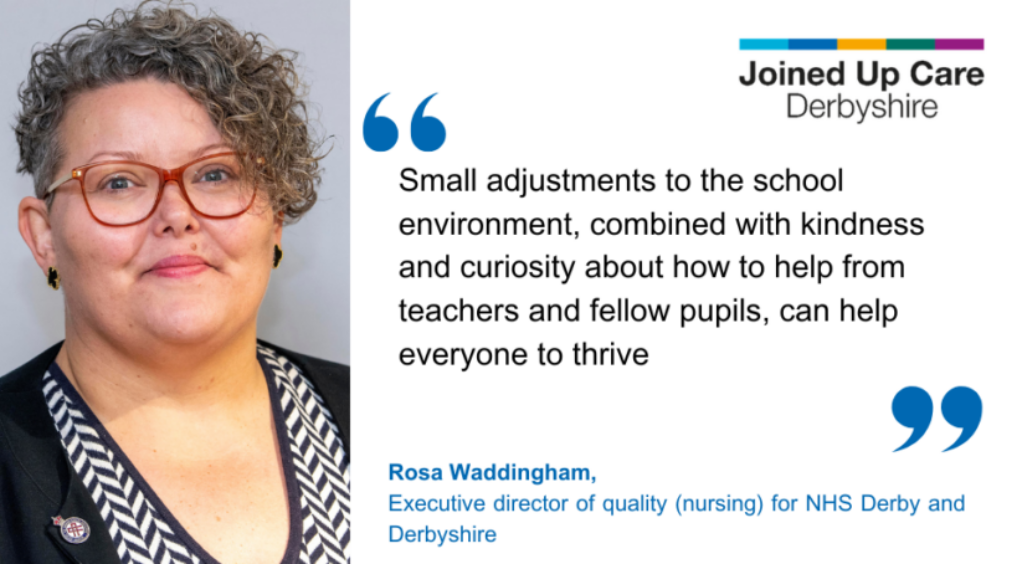
Rosa Waddingham, executive director of quality (nursing) for NHS Derby and Derbyshire, said: “Neurodiversity recognises the difference in the way people’s brains work. It is the way you are.
“Schools are able to support neurodiverse children regardless of whether they have a diagnosis or an Education Health Care Plan.
“Small adjustments to the school environment, combined with kindness and curiosity about how to help from teachers and fellow pupils can help everyone to thrive.
“It’s also about support for the parents, siblings and the wider community so children get the help they need at the earliest possible stage, with the lowest level of intervention needed.”
The successes in Derbyshire reflect evaluation of the PINS programme nationally, which showed ” positive effects on leadership, culture and values; teaching and learning; environment; communication; readiness to learn; and parent carer engagement.”