
Leading differently in neighbourhoods: “Amid budgets and restructures – compassion is still our foundation”
By Dr Gillian Davidson, Clinical Director of the Greater Derby PCN and Clinical Lead for Derby City Place.
Dr Gillian Davidson is a long‑standing Derby GP, Clinical Director of the Greater Derby PCN and Clinical Lead for Derby City Place. Her leadership has grown from 26 years in practice, deep personal conviction about improving people’s lives, and a relationship‑centred approach that has helped bring organisations across Derby closer together.
- What are the key aims in your area of neighbourhood working?
Our neighbourhood aims are rooted in strong relationships and shared purpose across Derby City. I work across three leadership roles, covering ten practices and a population of 350,000, and our focus is on prevention, partnership and practical impact. We work closely with the voluntary sector, Derby County Community Trust and community organisations on school readiness, smoking cessation, pain management and health checks in deprived areas. We’ve also run targeted prostate and cervical cancer screening campaigns with voluntary sector support, identifying early cancers and HPV in harder‑to‑reach groups. Estates remain a major barrier, but we’re committed to bringing services closer to communities. For me, the real aim is simple: when people and organisations connect well, patients benefit.
- What is your style of leadership and why?
My leadership style is driven by purpose and people. Everything we do must improve health and make lives better, and that belief comes from personal experience as well as decades in general practice. I listen deeply, challenge when needed and support people to do their best work. I’m more of an influencer than a commissioner; I prefer spotting what isn’t working and helping to change it. I value honesty, wisdom and kindness, and I’m not afraid to speak up when something isn’t right. My approach is human and focused on doing the right thing.
- What impact are you most proud of?
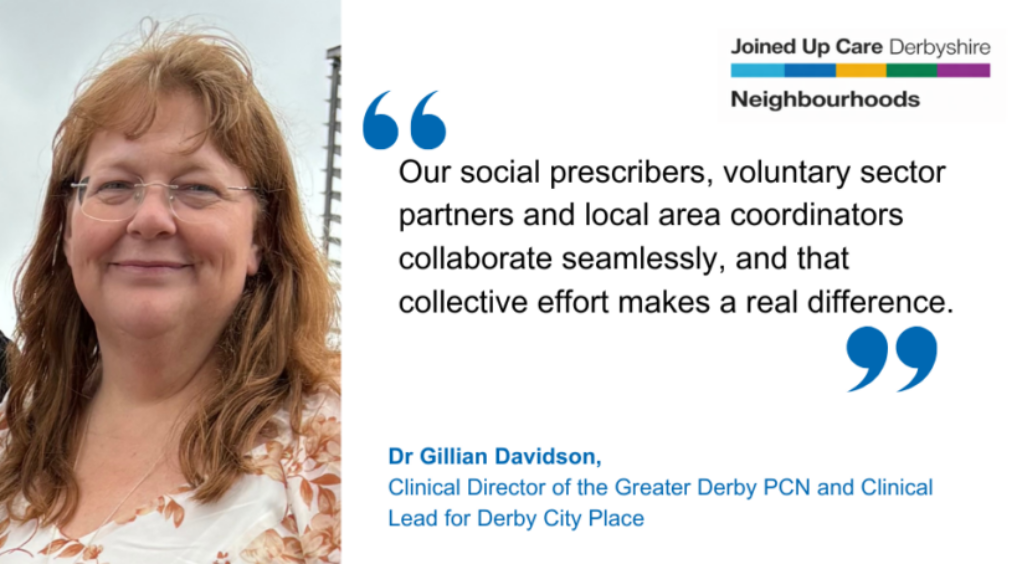
I’m proud of the culture we’ve built across every organisation I’m part of. My PCN brings together ten very different practices that work closely and effectively, which is something special. Our social prescribers, voluntary sector partners and local area coordinators collaborate seamlessly, and that collective effort makes a real difference. I’m also proud of the cross‑sector work at Derby City Place, including our joint health‑and‑housing group tackling issues like damp and mould and reducing unnecessary GP requests.
I lead with pride – noticing what’s going well and what needs to change – and I believe compassionate leadership means supporting people while keeping them on the right path. The impact I’m proudest of is creating environments where people feel able to do their best for patients.
- How was the old way of leading different, and why is this approach more successful?
When I started, general practice was far more isolated. We worked within our own walls, with little shared activity beyond weekly educational meetings. Today, although time pressures are greater, collaboration is much stronger. I’ve learned the importance of creating headspace and choosing meetings that genuinely matter. I prefer informal conversations where people speak openly and think creatively. The difference now is that we work across boundaries, build relationships and make decisions together. That shift – from siloed working to connected leadership – is what makes this approach more successful.
- How did your thinking change when moving from small‑scale to system‑wide working?
Working across the system has shown me how much more we can achieve when we connect with people outside our own discipline. I enjoy talking to different organisations and understanding how their work affects patients. Seeing how care services visit people compared to how GPs do has been eye‑opening. It’s clear that when we don’t understand each other’s pressures, things don’t work as well for patients. Finance remains the biggest blocker, but long‑term benefits outweigh short‑term imbalances. System working requires bravery, honesty and a willingness to look beyond your own boundaries.
- What are your catalysts, drivers and motivators?
My motivation comes from a deep belief that our work must improve people’s lives. Personal experiences of illness in my family shaped that early on. I’m driven by purpose, fairness and the responsibility we hold as clinicians. I feel fortunate to have a stable GP role that allows me to speak up, challenge constructively and stay focused on what matters most. I answer to patients and need, not hierarchy, after all we’re all here to improve health and reduce harm.
- What are the opportunities and challenges of this way of working?
Derby offers huge opportunities because we serve both the most and least deprived communities. Working at smaller scales allows us to tailor care, while the larger cluster gives us reach and influence. The challenge is infrastructure – we need more, not less, to deliver personalised care. Financial constraints and system fragmentation remain barriers, but GPs are resourceful and find ways around things. I also see real opportunity in the cross‑sector work we’re doing, from housing and health partnerships to targeted screening and community‑based support. The opportunity lies in combining big‑picture strategy and the local, relational work that makes change real. The opportunity lies in combining both.
- Has your job changed as a result of this?
Not dramatically yet – we’re still on the brink of something new – but I can see how it will evolve over the next few years. Every step feels like progress, even if small. The shift towards managing chronic illness in the community, reducing unnecessary hospital visits and building urgent care outside acute settings is significant. Services like Living Well with Pain, which supports deprescribing, and Team Up’s work with Admiral Nurses on dementia care, show what’s possible when we rethink where care happens I believe people shouldn’t have to go to hospital for routine investigations, and the future will require different ways of working. The direction is right: more community‑based care, more integration and more focus on long‑term health.
- What has been the impact of leading differently for patients and people?
We’re still early in this journey, but the impact is becoming clear. Change in the NHS is slow, and people only trust new approaches once they see them work. In my PCN, shared admin across ten practices, stronger links with external teams and faster access to physios and pharmacists have made a real difference. Patients get the support they need more quickly, without long waits. Our targeted cancer screening campaigns have identified early disease in communities that often miss out. We’re also seeing progress in shared social care roles and community engagement. It’s slow and steady, but it’s real – and it’s built to last.
- What else should others know or think about?
I want people to remember that everyone in the NHS is here because they care. My daughter has just started mental health nurse training and says everyone on her course is friendly, open and caring, and that captures the heart of our system. We lose sight of that amid budgets, deadlines and restructures, but compassion is still our foundation. I have huge pride in the NHS and see every step forward – however small – as meaningful. My leadership isn’t polished or theoretical; it’s just a natural style rooted in the belief that we’re all trying to make things better.