
“Our GP practice embraced online appointment requests – and it has changed everything for the better”
A GP practice where patients used to bring deck chairs to join the long queue for the “8am rush” for appointments has transformed its way of working – by embracing digital access.
Lister House surgery in Derby introduced a “total triage” system that that treats every patient request the same – whether it comes in online, by phone, through the NHS App or in person.
All requests for an appointment are assessed on the same day by a team of clinicians, using the same structured questions to ensure consistent decision making.
Once a recommendation has been made by clinicians, a team of administrators contact the patient to confirm the next step, whether that’s an appointment, a visit to a community pharmacy or self care advice.
Adopting the “total triage” system has:
- eliminated the physical queue for appointments
- allowed the practice to deal safely and consistently with all of its 2,500 weekly requests for appointments
- slashed “inappropriate” appointments
- greatly increased referrals to pharmacy
- improved patient satisfaction for access and responsiveness
- improved staff workplace satisfaction and reduced workplace stress
Maddy Corbyn, practice operations manager, said: “When we used to open up the surgery in the mornings the queue was around the car park and into the street.
“People used to bring deck chairs and start queueing from 6am.
“By 8:15am every appointment had gone and all we were able to do was to signpost people to NHS 111 and the local walk-in centre.”
Practice clinical lead Dr Mahya Johnson researched which software system they should adopt, attending demonstrations and speaking to other practices.
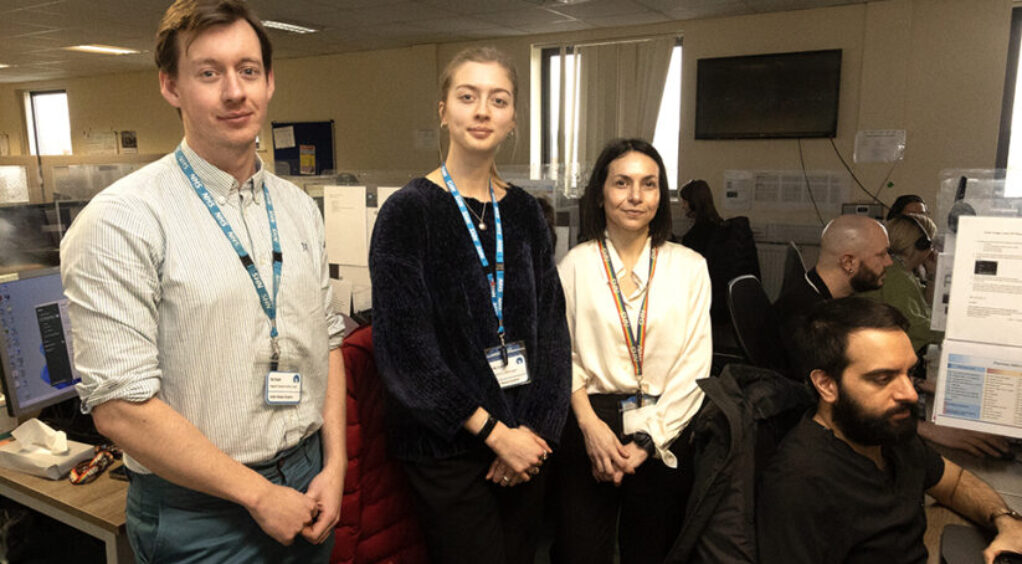
Lister House decided to use a method that means all requests for an appointment are assessed by a clinical team.
Their expertise, experience and ability to ask questions of each other at their bank of desks in the surgery’s contact centre means they can make decisions quickly and accurately, said Dr Johnson.
She said: “All the requests for appointments go into the same inbox.
“The clinicians review them, look at the patient’s records, and make a decision on how that patient should be seen.
“Some will get a same day urgent appointment and some are to be seen within 7 days or 14 days.
“Others are better dealt with by a clinician who is not a GP.
“For example, many issues are better dealt with by a pharmacist.
“If you have knee or back pain you will be better seen with by a first contact physiotherapist and issues like anxiety would be better dealt with by our mental health practitioners.
“Under our previous way of working we would have made an appointment to see the GP and he or she would then have referred the patient on for another appointment with the physiotherapist, for example.
“This way of working is better for patients, better for our teams and is obviously more efficient too.”
Audits of practice decisions and patient survey data before and after the new system was introduced have shown:
- the proportion of “inappropriate” appointments made fell from 36% in August to 12% in October
- the number of patient requests for appointment that were referred to pharmacy leapt from less than100 per month to more than 500 per month in October and November
- patient satisfaction with the online system increased from 56% to 70%
- 51% of patients said the issue they had raised had been resolved seven days later after the new system was introduced, compared to 28% previously
Lister House has 47,000 patients, who are seen at four sites across Derby.
Because of its size it is also a Primary Care Network (PCN) in its own right. This allows it to manage PCN services alongside practice services seamlessly.
The practice prepared carefully to introduce its “total triage” system in October, training its teams in guiding patients through the questions they would need to ask and in having the confidence to signpost to appropriate services.
The clinical teams take it in turns to work in the contact centre, splitting their week between this team-based work and their traditional consultation time with patients.
Dr Johnson said: “It can be a lonely experience being a room all day by yourself seeing patients, so the clinicians really enjoy working as a team together where they can talk and compare notes.
“They also have a really good and close relationship with the admin team who make the appointments because they are sitting alongside each other.
“The change has also freed up the time of the reception team and admin, so they can support patients in using the NHS app and in requesting the appropriate services.”
Ed Clark, digital lead for Lister House surgery and PCN manager, said: “Every form is reviewed the same day, even if it arrives at 5:59pm.
“If it is urgent we will deal with it there and then. If it’s not, we reassure patients with a text message and then book them in for a routine appointment in the next 7 or 14 days. So we feel we are managing the risks.”
Digital tools support patient access to GP practices across the Midlands- NHS England
“We love working here”
Members of the Lister House clinical and admin team spoke about their work.
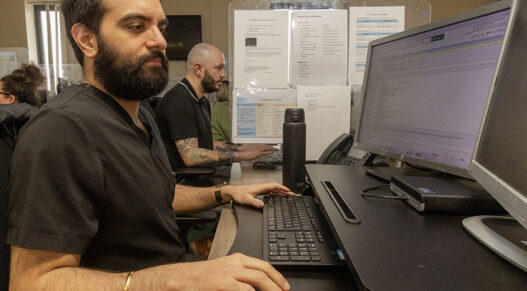
Dr Suki Dhamrait, a GP partner (pictured left), said: “When I come in first thing I’ll do a first skim of the 150 odd forms in my inbox.
“I separate out the urgent and deal with those. Then I go through the oldest first, make a referral and ask the admin team to make an appointment.
“I love it. It’s a fast paced environment and there’s a great camaraderie. It’s more efficient for patients because they get one appointment, not two, for example because they are not seeing a GP who then makes another appointment to see the physio.
“That means we are also getting better patient outcomes too.”
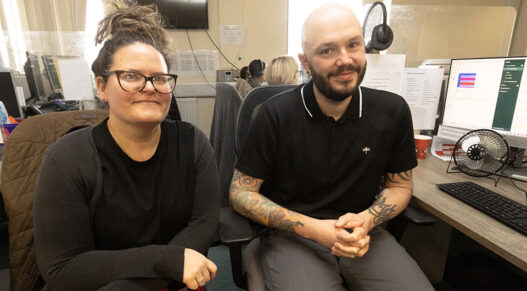
Damian Faulkner (pictured right), an advanced clinical practitioner, said: “Working in this way is much more efficient. For example, I might deal with a request for new medication or pain relief and I can do that in two minutes, instead of having the patient come in for a 15 minute appointment.”
Helen Barker, nurse practitioner (pictured left), has a specialism in skin issues and she advises patients based on photographs they send in.
She said: “If it’s eczema for example I might prescribe cream.
“If it’s a rash that’s a bit more complex and I might ask the patient for more detail about what’s happening.
“It means we can offer face to face appointments where they are the most appropriate and cut down on what is not necessary.”
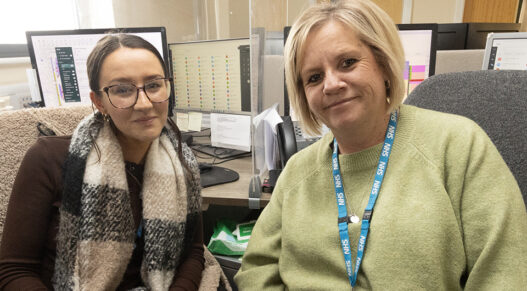
Louise Harwood, a triage support coordinator (pictured right), said: “After the clinicians have assessed the patient’s form I will call them back to tell them the clinician has reviewed their request and to offer an appointment.
“Patients are generally pleased because they are dealt with quickly and they get their appointment or advice.”
Triage support advisor Ellie Waldron (pictured left) added: “For patients this new system is amazing, compared to what they used to have to do. It’s really good.”