
Cold Sores
Page Contents
Cold sores are common and usually start with a tingling, itching, or burning feeling. They usually start to heal within 10 days and remain contagious until they are completely healed. They may continue to be irritating or painful until healed.
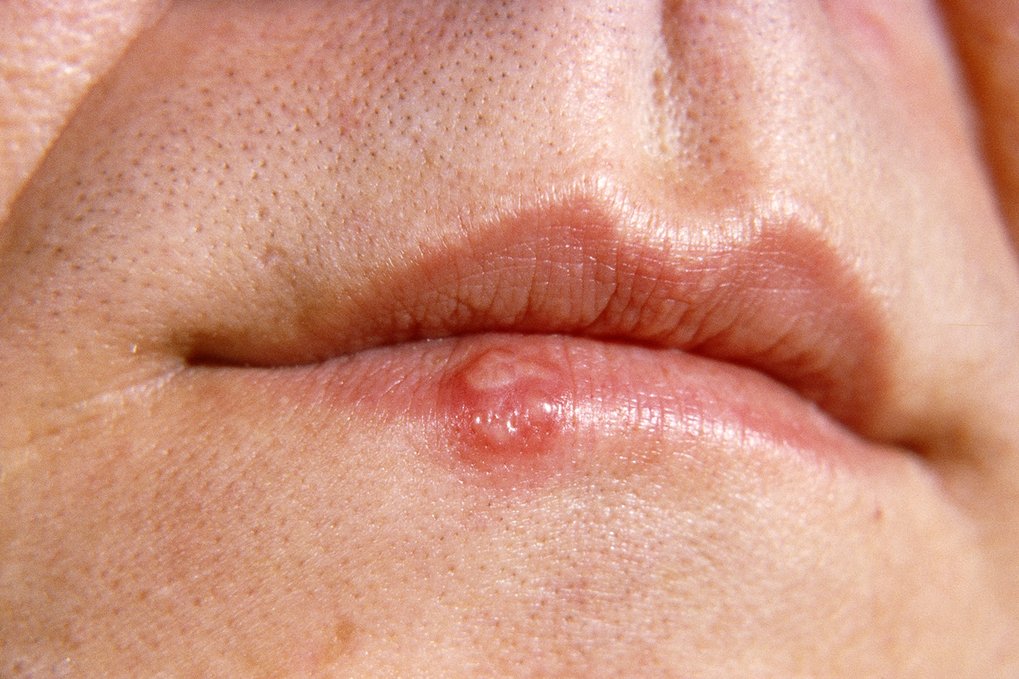
Small fluid-filled blisters appear
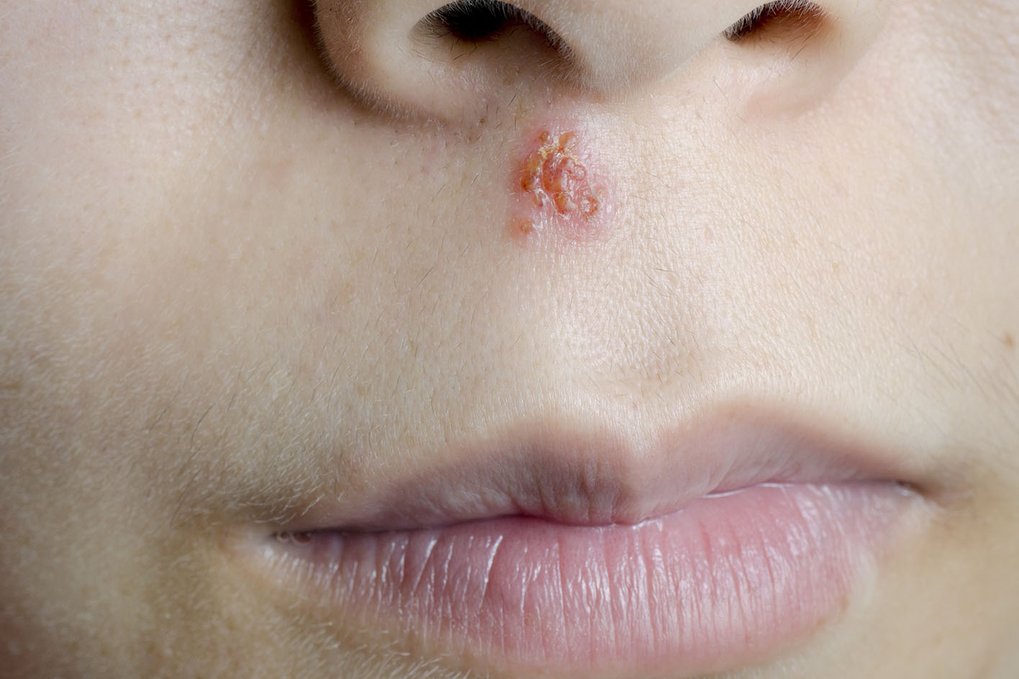
The blisters can appear anywhere on the face
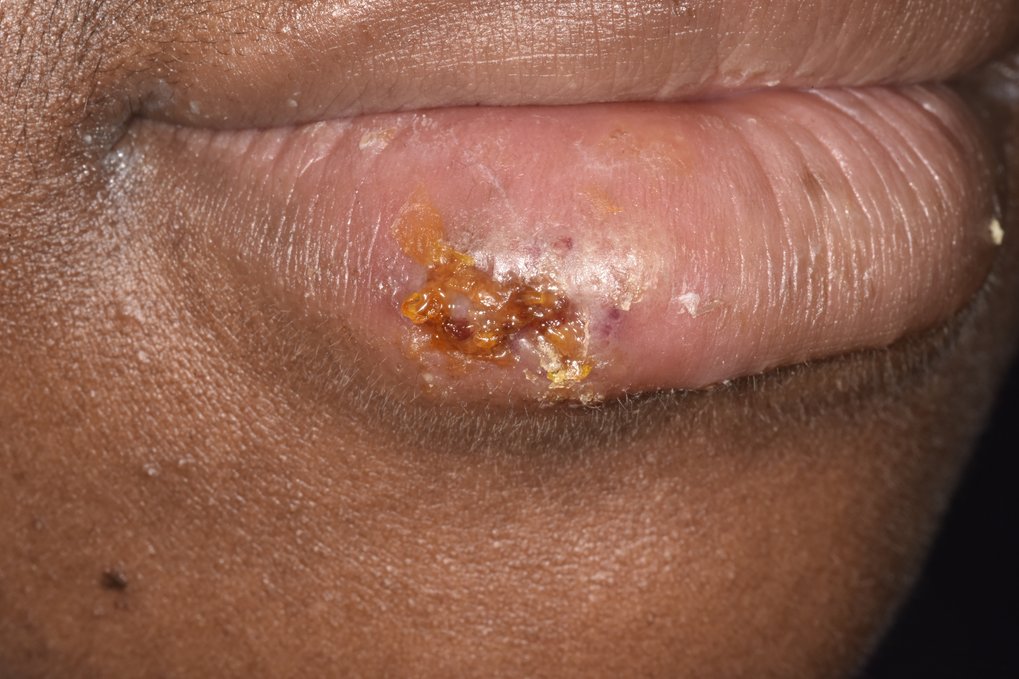
The blisters burst and crust over into a scab
Photos courtesy of NHS Choices
Why do cold sores come back?
Cold sores are caused by a virus called herpes simplex. Once you have the virus, it stays in your skin for the rest of your life. Sometimes it causes a cold sore. Most people are exposed to the virus when they’re young after close skin to skin contact with someone who has a cold sore. It doesn’t usually cause any symptoms until you’re older.
How can I avoid triggers/ suggested lifestyle changes?
Some people find that certain things trigger a cold sore, such as another illness, sunshine, or periods. If you regularly get cold sores, it may be a good idea to keep antiviral cream in your medicine cabinet. As soon as you recognise the early tingling feeling of a cold sore use the antiviral creams as they don’t always work after blisters appear.
How do I treat cold sores?
Cold sores take time to heal, and are very contagious, especially when the blisters burst.
Don’t kiss babies if you have a cold sore. It can lead to neonatal herpes, which is very dangerous to newborn babies.
Do
- Eat cool, soft foods
- Use an antiseptic mouthwash if it hurts to brush your teeth
- Wash your hands with soap and water before and after applying cream or after touching the area
- Avoid anything that triggers your cold sores
- Use sunblock lip balm (SPF 15 or above) if sunshine is the trigger
- Take paracetamol or ibuprofen to ease pain and swelling (liquid paracetamol is available for children) – don’t give aspirin to children under 16
- Drink plenty of fluids to avoid dehydration
Do not
- Eat acidic or salty food
- Touch your cold sore (apart from applying cream)
- Rub cream into the cold sore – dab it on instead
- Kiss anyone while you have a cold sore (Kissing babies can lead to neonatal herpes, which is very dangerous to newborn babies)
- Share anything that touches the cold sore (such as cold sore creams, cutlery, or lipstick)
- Have oral sex until your cold sore completely heals – the cold sore virus also causes genital herpes
Examples of products available to buy if applicable
-
Aciclovir Cream (also known as Zovirax)
When should I seek advice?
- The cold sore hasn’t started to heal within 10 days
- You’re worried about a cold sore or think it’s something else
- The cold sore is very large or painful
- You or your child also have swollen, painful gums and sores in the mouth (gingivostomatitis)
- You’re pregnant – there’s an increased risk of neonatal herpes
- You have a weakened immune system – for example, because of chemotherapy or diabetes
Where can I get more information?
- NHS Choices – nhs.uk
- Your local community pharmacy