Leading Differently in Neighbourhoods: “If our minds are open neighbourhoods can work preventatively and holistically”
By Dr Rebecca Gladstone
Rebecca Gladstone is a GP partner at West Park Surgery, joint neighbourhood lead for Erewash and the Team Up clinical lead. Having finished training in 2019, she stepped early into leadership, shaped by Erewash’s strong culture of collaboration. Her views centre on relationship‑building, inclusive leadership, and helping the next generation understand neighbourhood working. She sees neighbourhoods as the right way to deliver integrated, preventative, population‑focused care and works to ensure staff, registrars and partners across the system feel part of that journey.
- What are the key aims in your area of neighbourhood working?
When I came into post here at West Park, Erewash already had a strong foundation of relationship‑building from the vanguard work, so I’m a relatively new leader and that’s really helped me to fit into the system as it is now. My aim has been to continue fostering that collaborative culture. We have excellent engagement across DCHS, DHU, social care, the voluntary sector and public health, and that trust enables genuinely collaborative working. It means we can improve service delivery for our patients which is crucial – for example, Team Up could progress quickly because home visiting and frailty services were already established. By strengthening integration and ensuring everyone has a voice, we can deliver better, more coordinated care for our population.
- What is your style of leadership and why did you choose it?
I’m still developing my leadership style, having moved straight from being a registrar to the partnership. But being surrounded by experienced leaders has helped me learn, adapt and stay flexible. I focus on listening, avoiding hierarchy and taking people with me rather than dictating change. Making sure staff understand what’s happening, feel involved and can influence decisions is central. I’ve learned the importance of bringing people on the journey, being open, and shaping leadership around the needs and insights of those delivering the work every day.
- What impact are you most proud of creating by leading differently?
I’m proud of helping people understand neighbourhood working and bringing others into it. Many don’t know what neighbourhoods are unless they’re immersed in them, so I try to expose staff, registrars and new GPs to it early. Simple things – like inviting the voluntary sector to our carers’ morning – help people see collaboration in action. Supporting young doctors into neighbourhood fellowships, working with gynae consultants on women’s health hubs, and linking registrars into health inequalities work all help build the next generation of neighbourhood‑minded clinicians.
- What would an old way of leading have looked like, and what was different this time? Why was this more successful?
When I was a medical student, leadership in general practice was still very “we’re the GPs, we know best.” It was hierarchical and directive. Now it’s far more inclusive, with every profession having a valid voice. That shift – towards coordination, shared ownership and listening – makes neighbourhood working possible. It succeeds because people feel part of something, not instructed by it. The culture in Erewash already supported this, so stepping into leadership meant continuing a way of working that values collaboration over hierarchy.
- How did your thinking change from working on a smaller scale to working more across the system?
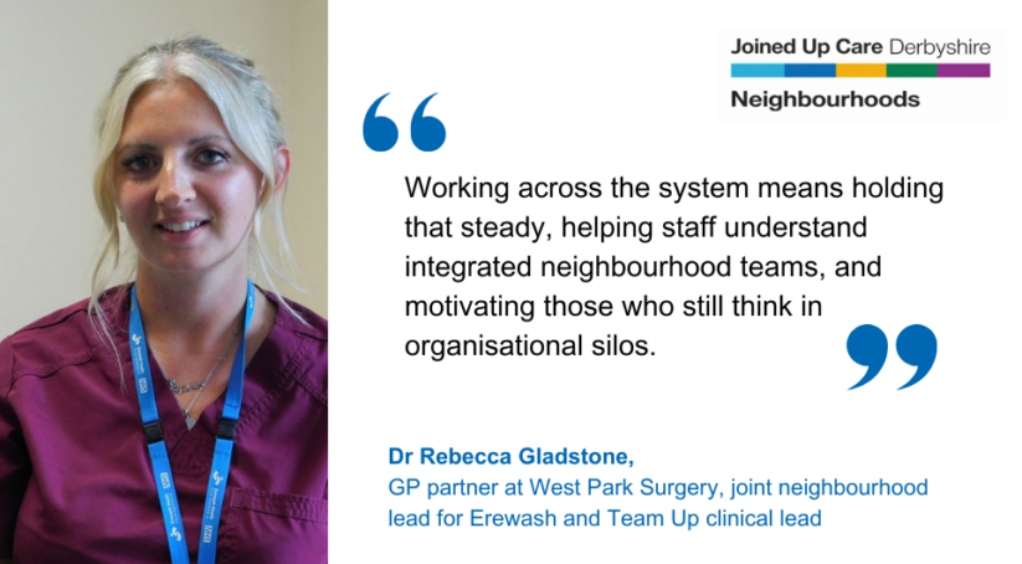
I entered leadership at a time when neighbourhood working was already established, so my focus has been on not slipping backwards – especially with uncertainty around the ICB changes and future support and resource. Working across the system means holding that steady, helping staff understand integrated neighbourhood teams, and motivating those who still think in organisational silos. Through things like the Ageing Well Summit, we’ve helped staff see themselves as part of a neighbourhood team, not just DCHS or DHU. It’s about keeping people focused on what’s right for Erewash despite the what’s going on around us.
- What were your catalysts, drivers and motivators?
My main driver is improving outcomes for the people of Erewash, but also making work better for staff – because job satisfaction matters. I want people to understand what’s happening, feel involved and enjoy being part of it. Frailty and women’s health motivate me too: frailty because of its complexity, and women’s health because it’s a clear opportunity for left shift. If we can successfully move gynae into the community, it opens the door for other specialties. Seeing potential and helping others see it too keeps me going.
- What are the opportunities and challenges of this working?
The opportunities are huge – collaborative working, using data to understand population needs, and genuinely listening to local groups who tell us what matters. Neighbourhoods can work preventatively and holistically if our minds are open. The challenge is uncertainty: ICB changes, resource questions and unclear governance make it hard to plan confidently. Even in Team Up, we’re trying to evidence quality of life improvements, which is difficult to capture. Ideally, commissioning and governance would flow naturally into neighbourhoods, with health, social care and the voluntary sector equally embedded.
- Has your job changed as a result of this?
Yes – mainly in awareness. When I finished training, I didn’t know neighbourhoods or place existed. I’ve learned on the job, and now I make sure registrars and new GPs understand this way of working early, because it isn’t taught. My role now involves thinking beyond the practice, understanding system pressures, and helping others navigate neighbourhood working. It’s broadened my perspective and made leadership a core part of my clinical career.
- What has been the impact of leading differently for patients and people?
Patients now access a wider range of support that isn’t purely medical. Our single point of access for non-medicalised approaches – We Flourish – means people struggling with mood or social issues get one high‑quality conversation and are directed to the right service, whether that’s Citizens Advice, social prescribing or mental health practitioners. It empowers people to manage their wellbeing rather than defaulting to the GP. Social prescribers, including one for young adults, provide vital support for those who don’t need medication but do need help navigating life’s challenges.
- Do you have anything else to add that others should know or think about?
Don’t be afraid to try leadership, especially if you’re newly qualified. You don’t need to have it all figured out – just be willing to get involved, ask questions and see what happens. Exposure is everything: speak to someone already in neighbourhood working, come to a meeting, observe how it works. Leadership is everywhere in this space, and we need the next generation to step into it with curiosity and confidence.