
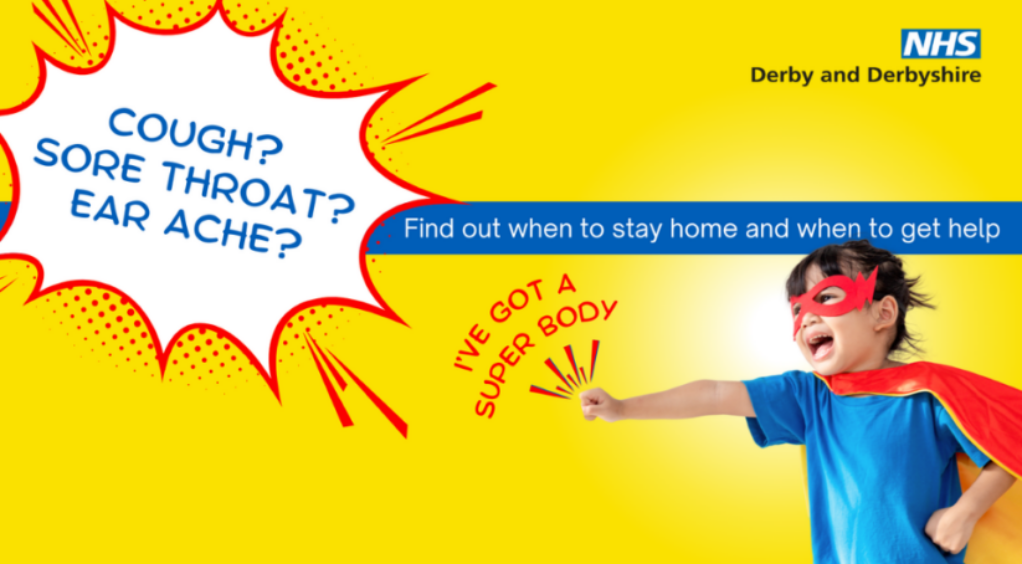
Supporting your children’s ‘super bodies’ this winter
This winter, the NHS in Derby and Derbyshire are sharing guidance for parents and carers on common winter illnesses that often start circulating at this time of year.
Illnesses like coughs, sore throats and ear ache are extremely common in young children, but healthcare leaders are asking parents and carers to think twice before treating them with antibiotics, as they rarely speed up recovery for these conditions, which are most often caused by viral infections.
Our children’s ‘super bodies’ are designed to fight off many common illnesses, without the need for antibiotics. And parents and carers can do some simple things to treat these common illnesses at home.
Cough
Most coughs can be managed safely at home. Encourage your child to rest, drink plenty of water and, if they’re over one year old, warm lemon and honey can help soothe symptoms. Keep them home if they have a high temperature or don’t feel well enough for normal activities. Your local pharmacy can also offer quick advice.
You should speak to your GP if the cough lasts longer than three weeks, your child has a weakened immune system, or they are losing weight for no clear reason.
Contact NHS 111 if they are coughing up blood, finding it hard to breathe, if the cough suddenly gets much worse, they feel very unwell or have chest pain, or if their neck is swollen and painful.
Earache
Earache is common in children and can often be treated at home with age‑appropriate painkillers and a warm or cool cloth held against the ear. Your pharmacy can also advise on suitable treatments.
See your GP if the earache lasts more than three days or keeps coming back.
Contact NHS 111 if your child becomes generally unwell, has a high temperature or shivering, has swelling around the ear, fluid coming from the ear, something stuck inside, a change in hearing, or if they are under two with earache in both ears.
Sore throat
Most sore throats get better on their own. Make sure your child rests, drinks plenty of water and try giving them ice lollies to soothe the pain. Your local pharmacy can also offer fast advice.
See your GP if the sore throat hasn’t improved after a week or happens often. Contact NHS 111 if they have a very high temperature or a weakened immune system.
Call 999 or go to A&E if your child is struggling to breathe or swallow, is drooling, makes a high‑pitched sound when breathing, or if symptoms are severe or worsening quickly.
Temi Omorinoye, Pharmacist, said: “Every winter we see lots of coughs, earache and sore throats in children.
“The good news is that most get better with rest, fluids and simple pain relief available at your local pharmacy.
“Antibiotics don’t work for viruses and are rarely needed for these common illnesses. Using them when they’re not needed can cause side effects and make antibiotics less effective for everyone.
“Every time antibiotics are taken unnecessarily, bacteria have the chance to adapt and become resistant, meaning these medicines may not work when children genuinely need them.
“Always trust your instincts, you know your child best, so if your child is getting worse, has trouble breathing or swallowing, is unusually sleepy, or you’re worried, use NHS 111 for advice, and call 999 in an emergency.
“See your GP if symptoms aren’t improving as expected, or if your child has a weakened immune system or other ongoing conditions. Keeping vaccinations up to date also gives important protection over winter.”
Our children’s ‘super bodies’ do amazing work against common illnesses like coughs, sore throats and earache.
By preparing ourselves with the information and knowledge to care for them at home, spot more serious symptoms, and know when and where to get help, we can support them to feel better sooner, and without unnecessary use of antibiotics.